
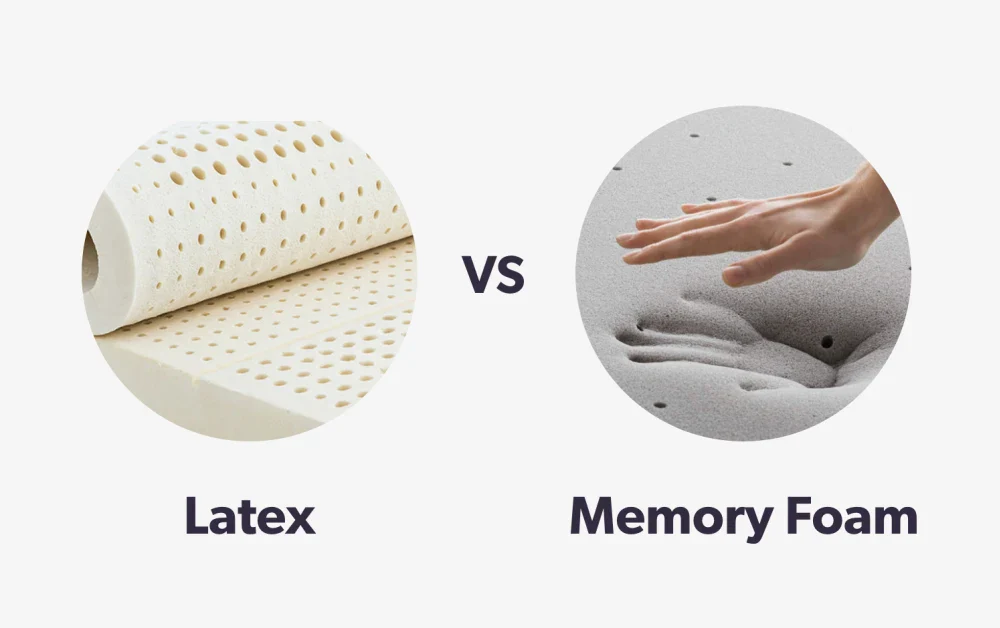
When you’re shopping for a new mattress, it’s easy to get caught up in how it feels for those five minutes in the showroom (or that first night out of the box). But the real test isn’t tonight—it’s five, seven, or even fifteen years from now.
Memory foam and latex are the two heavyweights of the “spring-free” world. Both promise to end the era of creaky coils and sagging centers, but they age very differently. If you want to avoid buying a new bed every few years, you need to understand the lifespan battle between these two materials.
1. Memory Foam: The “Warm Hug” That Needs Density
Memory foam is famous for that “melting” sensation. It uses your body heat to contour perfectly to your shape, providing elite pressure relief. However, its greatest strength can also be its longevity weakness.
- How it Ages: Low-density memory foam can lose its “resilience” over time. This leads to those annoying body impressions—permanent dips in the mattress that make it feel like you’re sleeping in a trench.
- The Longevity Secret: It all comes down to density. A high-density memory foam ($50+ kg/m^3$) is packed with more material and fewer air bubbles. This allows it to bounce back to its original flat surface day after day.
- Expectation: A high-quality, high-density memory foam mattress should comfortably last you 8 to 12 years before you notice a change in support.
2. Latex: The Marathon Runner of Mattresses
Latex is often called the “forever foam.” Derived from the sap of rubber trees, it is naturally elastic and incredibly tough.
- How it Ages: Unlike memory foam, which softens with heat, latex maintains a consistent “push-back” feel. It is much less likely to develop the “craters” associated with cheaper synthetic foams.
- The Longevity Secret: Natural latex is inherently durable. Because it is a single, dense material rather than a chemical blend, it doesn’t break down as quickly when exposed to oxygen or weight.
- The Trade-off: While a latex mattress can easily last 15 to 20 years, it is a significant investment. It’s heavier, pricier, and has a “bouncy” feel that lacks the deep sink-in comfort of memory foam.
3. Comparing the Specs: Which One Wins?
| Feature | Memory Foam (High-Density) | Natural Latex |
| Typical Lifespan | 8–12 Years | 15–20 Years |
| Primary Feel | Deep Contouring / “Hug” | Responsive / “Bouncy” |
| Durability Factor | Density ($kg/m^3$) is key | Naturally resilient rubber |
| Price Point | Mid-Range to Premium | Premium / High-End |
4. How to Make Your Choice Last Even Longer
Regardless of which material you choose, “structural fatigue” is the enemy. Here is how the pros at thebluemattress.com recommend protecting your investment:
- The “Rotate, Don’t Flip” Rule: Most modern foam mattresses are layered, so you can’t flip them over. Instead, rotate it 180 degrees every six months to ensure even wear across the surface.
- The Shield: Use a high-quality, breathable mattress protector. Moisture (sweat) and dust mites actually accelerate the breakdown of foam cells. Keeping it dry keeps it strong.
- The Foundation: Ensure your bed frame has enough slats. If the slats are too far apart, the foam will sag between them, ruining even the most expensive mattress in months.
Final Thoughts: Comfort vs. Time
While latex technically wins the “lifespan battle” on paper, modern high-density memory foam has closed the gap significantly. For many households, the 10-to-12-year lifespan of a premium memory foam bed is the “sweet spot” of value and comfort.
In the end, your mattress is an investment in your health. Whether you choose the contouring support of foam or the springy durability of latex, prioritizing quality materials over the lowest price is what ensures you’ll be sleeping soundly a decade from now.
Is your current mattress starting to show its age? Explore our high-density foam solutions at thebluemattress.com to find the perfect balance of comfort and longevity.