
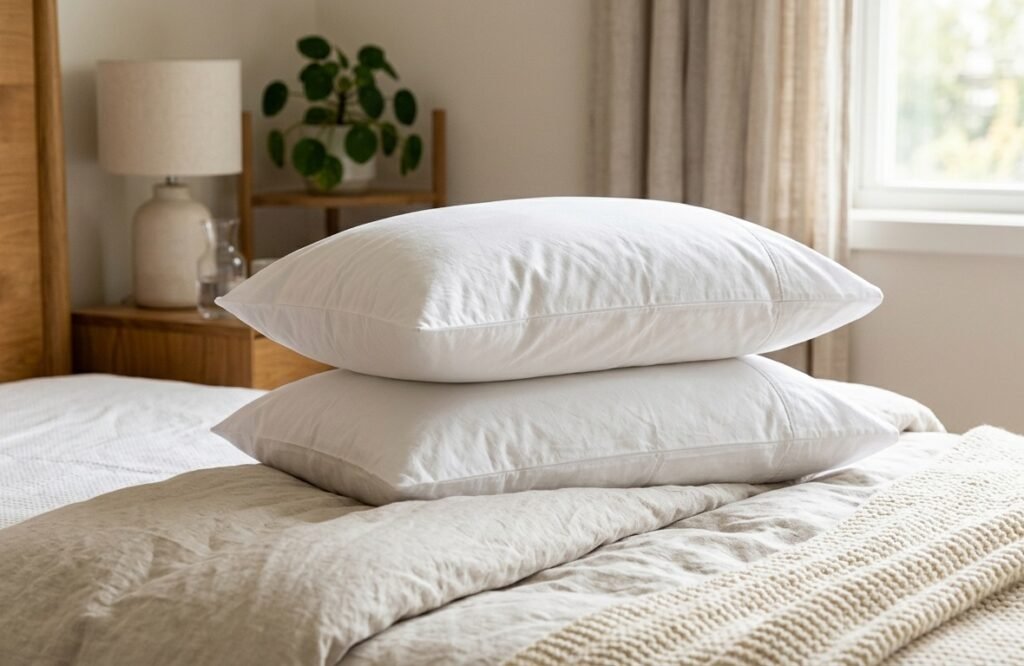
Not sure why your neck feels sore every morning, even on a good mattress? The answer often comes down to three things: the pillow’s material, its firmness, and whether it fits your sleep position. Get one of these wrong and the other two won’t save you.
This guide walks through how to think about each factor so you can pick a pillow that actually works for your body, not just one that looks appealing on a shelf.
Start With Your Sleep Position
Your sleep position decides how much height and firmness your neck needs. This is the first filter to apply before looking at material or brand.
- Back sleepers need medium loft and enough firmness to support the neck’s natural curve without pushing the head forward.
- Side sleepers need a taller, firmer pillow that fills the space between the ear and the shoulder.
- Stomach sleepers need a soft, low pillow, since anything too thick tilts the neck at an angle for hours.
- Combination sleepers who shift positions through the night often do better with a medium pillow that adapts reasonably well to more than one position.
Understanding Pillow Materials
Memory Foam
A memory pillow uses foam that reacts to body heat, gradually forming around the head and neck. It holds this shape until you move, then slowly resets.
This makes it a solid pick for people who want consistent support that doesn’t shift much overnight.
Gel-Infused Foam
An e-gel pillow blends gel into the foam structure to offset heat buildup. The gel layer draws heat away from the head, which matters more in Pakistan’s hotter regions where a standard foam pillow can feel warm by midnight.
Fiber Fill
Ball fiber pillows use small round fiber clusters that shift and move as you adjust. Microfiber pillows use finer synthetic strands, giving a softer, smoother feel.
Both are lightweight, machine washable in most cases, and easier to maintain than natural fillings.
Natural Down and Feather
Duck down feather pillows use natural feather filling known for a soft, compressible feel. They mold easily under the head’s weight but flatten faster than foam, so they need regular fluffing to hold shape.
Structured Foam Shapes
Contour pillows and cervical pillows are technically foam-based too, but their value comes from shape rather than material alone. A contour pillow uses curved edges to cradle the neck, while a cervical pillow is built around supporting the neck’s natural arch, usually with a firmer feel.
How Firmness Should Match Your Body
Firmness isn’t just personal preference. It also depends on body weight and shoulder width.
- Lighter body frames usually sink less into a pillow, so a softer or medium option often feels right.
- Broader shoulders need a firmer, taller pillow to keep the head level with the spine, especially for side sleepers.
- People with existing neck stiffness often benefit from firmer support, such as a cervical pillow, though it’s worth trying one briefly before buying if possible.
A Simple Way to Narrow Down Your Choice
If you’re stuck between options, work through this order instead of picking based on appearance:
- Identify your main sleep position.
- Match that position to a loft and firmness range.
- Pick a material based on your climate and any allergy concerns.
- Only then compare specific types like memory, contour, or fiber fill within that shortlist.
This keeps you from choosing a pillow that feels nice in a showroom but doesn’t support your neck through a full night.
Where Local Climate Comes In
Pakistan’s mix of humid coastal areas and hot, dry inland cities affects how a pillow feels over months of use. Heavier natural fillings can trap warmth, while gel-infused or microfiber options tend to stay cooler through summer nights.
Winter months are more forgiving, so many people switch to a slightly heavier or plusher pillow seasonally rather than using the same one year-round.
Getting Help From Diamond Foam
Diamond Foam works with a range of pillow types, from memory and contour to gel-infused and fiber-filled options, and can help match one to your sleep position and local climate. Rather than guessing based on price or appearance, it’s worth describing your sleep habits directly and asking which type fits best.
Choose the Right Pillow Material & Firmness
Choosing well means working through your sleep position first, then narrowing by firmness and material, rather than picking whatever looks the most appealing. A little extra thought here pays off in fewer sore mornings.
Frequently Asked Questions
How do I know what firmness pillow I need?
Your sleep position and body frame both play a role. Side sleepers with broader shoulders typically need firmer, taller pillows, while stomach sleepers usually need something soft and low.
Is memory foam or fiber fill better for a pillow?
Memory foam holds a steady shape and supports the neck consistently, while fiber fill feels softer and is easier to wash, so the better choice depends on whether you prioritize support or maintenance.
Can one pillow work for every sleep position?
A medium-loft pillow can work reasonably well for combination sleepers, but dedicated back, side, or stomach sleepers usually get better neck support from a pillow matched specifically to their position.
Do gel pillows actually sleep cooler?
Gel-infused pillows are designed to draw heat away from the head, and many people notice a cooler feel compared to standard foam, especially during warmer months.
How often should I replace my pillow?
Most pillows lose shape and support after extended daily use, and a flattened or lumpy pillow no longer holds the neck at the right height, regardless of the original material.