
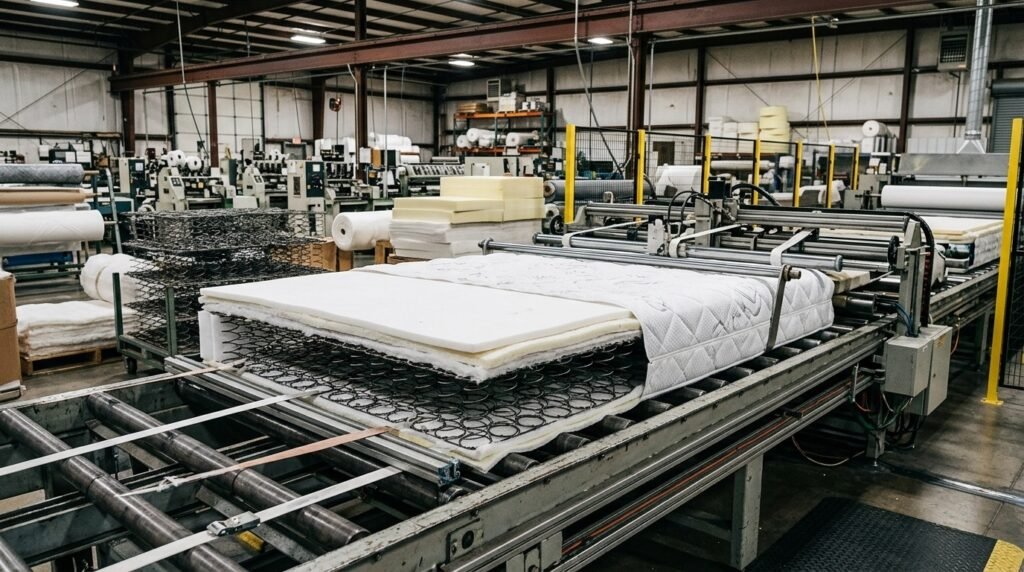
Most people spend a third of their lives on a mattress, yet few understand the intricate engineering that goes into creating one. Far from being just a “big cushion,” modern mattress manufacturing is a highly technical discipline that blends artisanal craftsmanship with advanced industrial engineering.
From raw material sourcing to the final vacuum seal, every stage is designed to maximize spinal alignment and long-term durability. Here is an in-depth look at the step-by-step process of how a premium mattress is made in 2026.
Step 1: Strategic Selection of Raw Materials
The journey begins with the selection of high-grade, certified materials. The primary components vary drastically depending on the specific sleep technology:
- Memory Foam: Utilizes high-density polyurethane foam, often enhanced with Gel-Cool additives for superior thermal regulation.
- Innerspring: Relies on high-tensile steel wires for various coil configurations.
- Latex: Harvested from natural rubber tree sap (Organic) or synthesized for consistent responsiveness.
- Hybrid Models: A sophisticated combination of pocketed steel coils and adaptive foam comfort layers.
Manufacturers also select specialized fabrics for the “ticking” (outer cover), such as moisture-wicking bamboo, breathable cotton, or durable polyester blends designed for maximum airflow.
Also Read: Are Folding Mattresses Comfortable? Everything You Need to Know
Step 2: Precision Cutting and Foam Zoning
For foam-based or hybrid mattresses, the core layers must be shaped with mathematical precision using CNC (Computer Numerical Control) technology.
- Slab Trimming: Large foam blocks (buns) are produced and then trimmed using vertical or horizontal CNC machines to ensure perfectly straight edges.
- Anatomical Zoning: Advanced machines cut the foam into “zones” with varying firmness levels. This ensures softer support for the shoulders and firmer, high-density support for the lumbar region to maintain a neutral spine.
- Consistency Check: Automated sensors ensure every layer has a uniform thickness, which is critical to preventing future sagging.
Step 3: Engineering the Coil System
Innerspring and hybrid mattresses require a robust internal architecture. This is often the most mechanical part of the factory floor:
- Coiling: Steel wires are fed into automated machines that twist them into specific shapes, such as Bonnell, Offset, or Pocketed Coils.
- Tempering: The coils are heat-treated or “tempered.” This electrical process ensures the springs return to their original shape after being compressed, enhancing long-term resilience.
- Encasing: In high-end models, each spring is individually wrapped in a fabric pocket. This allows for independent movement, which is the secret behind superior motion isolation.
Step 4: Layer Assembly and Bonding
Once the individual components are ready, they move to the assembly line. This is where the mattress’s “feel” (Plush, Medium, or Firm) is truly created.
- The Sandwich Method: Layers are stacked in a specific sequence—usually starting with a firm base, followed by the support core, and ending with plush comfort layers.
- Adhesion: Eco-friendly, water-based adhesives or precision stitching are used to secure the layers. This ensures the internal components don’t shift or bunch up over years of use.
Step 5: Quilting, Sewing, and Ticking
The “ticking” is the outermost fabric layer. This step focuses on both the aesthetic appeal and the tactile comfort of the sleep surface.
- Panel Quilting: Large-scale quilting machines stitch the top fabric to a thin layer of backing foam or fiber, creating the “puffy” patterns that define a luxury mattress.
- Flanging and Closing: The side panels (borders) are attached to the top and bottom panels using a heavy-duty “tape edge” sewing machine. This requires significant manual skill to ensure a perfectly straight, durable seam that can withstand years of pressure.
Step 6: Advanced Compression and Packaging (Bed-in-a-Box)
In 2026, the majority of mattresses are designed for the “Bed-in-a-Box“ delivery method, which requires specialized machinery.
- Compression: A massive hydraulic press applies tons of pressure to flatten the mattress to just a few inches tall.
- Vacuum Sealing: The air is extracted, and the mattress is sealed in heavy-duty, puncture-resistant plastic.
- Rolling: The flattened mattress is rolled into a tight cylinder. This allows it to fit into a compact shipping box without damaging the internal cellular structure of the foam or the integrity of the coils.
Step 7: Rigorous Quality Control and Testing
Before a mattress leaves the facility, it must pass a series of “torture tests” to ensure it meets international safety and comfort standards.
- Rollator Test: A heavy, drum-like weight is rolled across the surface thousands of times to simulate 10+ years of wear.
- Firmness Mapping: Electronic sensors measure pressure distribution to ensure the mattress hits the target “Medium-Firm” or “Plush” rating accurately.
- Visual Inspection: Specialists check for any skipped stitches, fabric snags, or alignment issues that might compromise the product’s lifespan.
Step 8: Logistics and Final Delivery
The final step is getting the product from the factory floor to your bedroom.
- Direct-to-Consumer (DTC): Many brands now ship directly from the factory, reducing the carbon footprint and lowering overhead costs for the consumer.
- Retail Distribution: Traditional models involve sending units to climate-controlled warehouses before they are displayed in luxury showrooms.
Conclusion: Why the Process Matters
The mattress manufacturing process is a delicate balance of heavy engineering and soft-touch comfort. Understanding these steps—from the tempering of the steel to the precision of the CNC foam zoning—helps you appreciate the value of a high-quality sleep surface. When you choose a mattress, you aren’t just buying foam and fabric; you are investing in a complex system designed to support your health and recovery for years to come.
Frequently Asked Questions (FAQs)
1. How long does it take to manufacture a single mattress?
While physical assembly might take only a few hours in a modern facility, the entire cycle, including foam curing, coil tempering, and rigorous quality testing, can span several days.
2. Are all mattresses made with the same materials?
No. While many use standard polyfoam, premium models incorporate specialized materials like natural latex, copper-infused memory foam, and high-tensile pocketed coils to provide specific orthopedic benefits.
3. Why is mattress quality control so important?
Quality control ensures that the motion isolation, edge support, and fire-safety standards are met. This protects both the longevity of your investment and the safety of your home.