
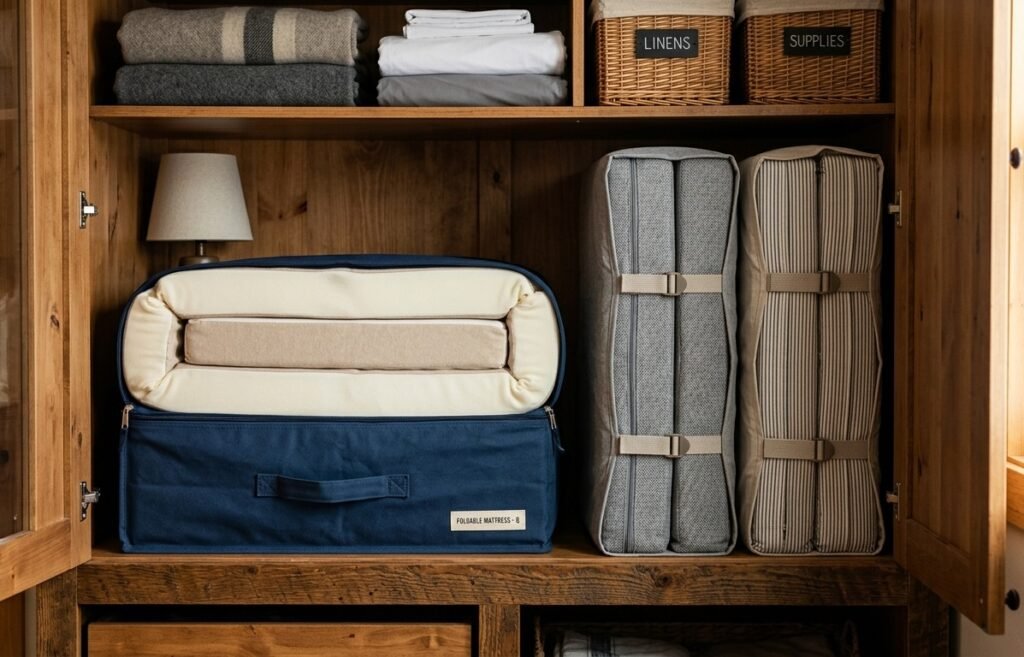
Looking to store your foldable mattress without ruining its comfort or lifespan? These mattresses are convenient, versatile, and perfect for guest rooms, small apartments, or camping trips. However, improper storage can lead to permanent creases, sagging, or even odor problems.
To help you maintain your investment, we have compiled expert tips for storing folding mattresses safely in 2026. By following these simple steps, you can ensure your mattress stays comfortable, supportive, and durable for years to come.
Why Mattresses Require Proper Storage
Diamond foam foldable mattresses, often made from high density foam, polyurethane foam, or hybrid materials, are designed for flexibility. However, their foam cores and stitching are sensitive to prolonged compression, heat, and moisture.
Improper storage can cause:
- Permanent Creases: Folding at sharp angles or placing heavy objects on the mattress can leave lasting indentations.
- Sagging or Deformation: Over time, the foam may lose its resilience and “push-back” support if stored incorrectly.
- Odor and Moisture Damage: Storing in damp areas can lead to mildew, mold, or unpleasant smells that are difficult to remove.
Following best practices preserves both the mattress’s structural integrity and its overall longevity.
Step by Step Guide to Safe Storage
1. Fold Carefully and Correctly
Most foldable mattresses are built with specific hinges. How you handle them matters:
- Fold along the natural crease lines if your mattress has built-in sections.
- Avoid creating sharp bends that stress the foam or pull at the seams.
- If possible, fold the mattress in sections rather than all at once to distribute the pressure evenly.
2. Keep it Clean
Before tucking it away, a thorough cleaning is essential for hygiene:
- Vacuum to remove dust, hair, and microscopic debris.
- Spot-clean stains with a mild detergent and water, but be careful to avoid soaking the foam.
- Ensure it is completely dry before storage; even a hint of moisture can trigger mold growth.
3. Use a Protective Mattress Bag
Don’t leave your foam exposed to the elements:
- A breathable bag is ideal as it prevents dust accumulation while allowing airflow.
- Avoid plastic bags for long-term storage, as they trap moisture and can cause the foam to “sweat” and degrade.
- Choose a bag that fits snugly without compressing the mattress excessively.
4. Store in a Cool, Dry Location
Temperature and humidity are the biggest enemies of foam mattresses:
- Avoid damp basements, attics with extreme heat, or areas with direct sunlight.
- Ideal conditions: Room temperature and low humidity, away from sharp objects.
- Keep the mattress off the floor using a shelf, pallet, or platform to allow airflow underneath.
5. Avoid Heavy Pressure
Never stack heavy suitcases or furniture on top of a folding mattress. This extra weight can create deep, irreversible indentations and weaken the foam layers.
6. Let it Rest After Unfolding
When it’s time to use the mattress again:
- Unfold it gently and lay it flat.
- Allow it to rest for 12 to 24 hours so the foam can regain its original loft and shape.
- This “breathing” period prevents sagging and restores optimal comfort.
7. Consider Rolling Instead of Folding
If your mattress is designed to be rollable, this can sometimes reduce sharp pressure points. Use gentle tension and secure it with soft straps, ensuring it is perfectly clean before you begin.
Long-Term Storage Strategy
For periods longer than a few weeks, try to store the mattress flat if space allows. This is especially true for orthopedic or high-density foam varieties. Rotate the mattress occasionally and inspect it every few months for any signs of moisture or pests. Avoiding storage in garages or vehicles for prolonged periods is crucial, as extreme temperature fluctuations can damage the foam’s cellular structure.
Benefits of Safe Storage
Properly storing your mattress ensures:
- Longer Lifespan: The foam retains its shape and signature comfort.
- Hygiene and Freshness: Eliminates the risk of mold and unpleasant odors.
- Easy Setup: The mattress unfolds smoothly without awkward lumps.
- Peace of Mind: Keep the mattress in “like-new” condition for your next guest or adventure.
Read More: Are Folding Mattresses Comfortable? Everything You Need to Know
FAQs
- How should I fold a foldable mattress safely?
Always fold along the natural crease lines provided by the manufacturer. Avoid forcing the foam into sharp bends, which can cause permanent damage to the core.
- Can I store a folding mattress in a plastic bag?
It’s not recommended for long-term use. Plastic traps moisture, which can lead to mildew. Use a breathable fabric storage bag instead.
- How long can I keep a mattress folded?
While designed for folding, it’s best to unfold it every few months if in long-term storage to let the foam fibers recover.
- What is the best place to store a folding mattress?
A climate-controlled environment, like a spare closet or under a bed, is best. Avoid attics and basements where temperatures and humidity levels fluctuate wildly.