
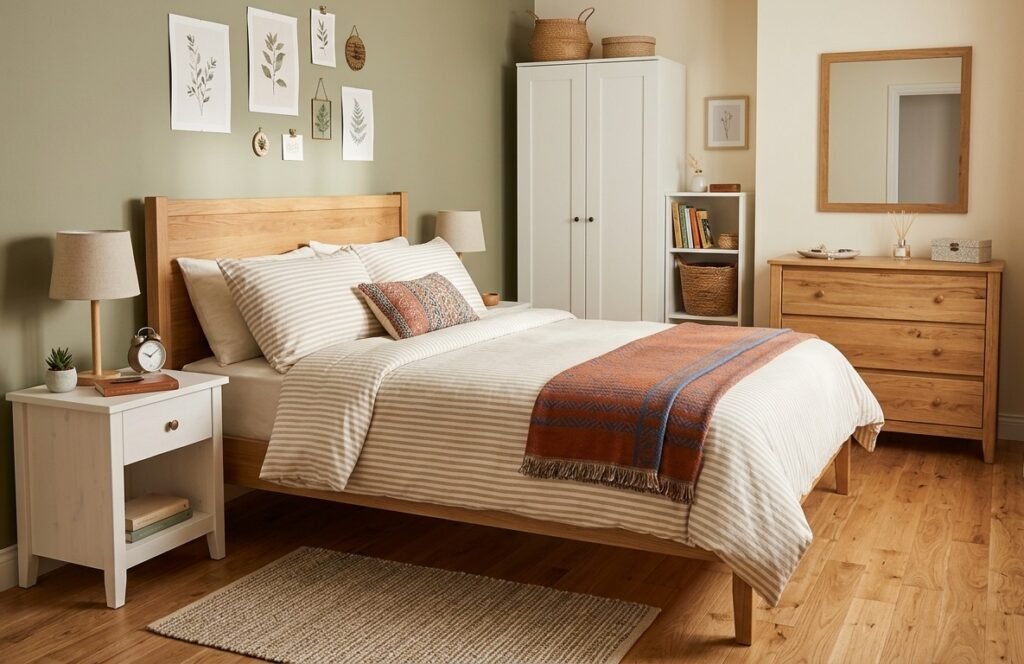
Does your bedroom feel crowded on one side and empty on the other? A balanced layout starts with the bed. Place it on the wall that faces the door or sits furthest from it, center it if the room allows, and leave 24 to 30 inches of walking space on each side. Then arrange the remaining home furniture so the visual weight is spread across the room instead of stacked in one corner.
Below, you’ll find simple steps, layouts for common room sizes, and mistakes to avoid.
Quick Answer: The Five Rules of a Balanced Layout
- Anchor the room with the bed. Everything else works around it.
- Spread heavy pieces out. Don’t put the wardrobe, dresser, and bed on the same wall.
- Keep 24 to 30 inches of walkway space. Clear paths make a room feel larger.
- Match the scale. Large furniture belongs in large rooms.
- Mirror where you can. Matching side tables on both sides create instant symmetry.
Start by Measuring and Mapping the Room
Measure the length and width of the room. Note the door, windows, AC unit, and electrical outlets. Then sketch a simple floor plan on paper.
Use masking tape on the floor to mark where the bed and large furniture will go. Walk around the outlines and open the doors and drawers. It takes ten minutes and saves you from moving heavy furniture twice.
Place the Bed First
The bed set is the largest piece, so it sets the layout.
Best Bed Positions
- Centered on the longest solid wall: Gives access from both sides and a balanced look.
- Facing the door at an angle: Lets you see the entrance from bed without being directly in line with it.
- In a corner: Saves floor space in a small room, but limits access on one side.
Avoid placing the bed directly under a ceiling fan or in the direct airflow of the AC. Keep the headboard against a solid wall, not a window, when possible.
Choose the Right Bed for Your Space
Modern bed designs come in many shapes, and each affects how the room feels. Low-profile frames make a small room look more open. Storage beds replace a dresser in a tight space. Slim headboards save several inches compared to thick, padded ones.
Check the full frame dimensions, including side rails and headboard, not just the mattress size. A frame with wide rails can add several inches to each side.
Read More: How to Choose the Right Bed Set for Your Bedroom
Balance Visual Weight
Visual weight is how heavy a piece looks. Large, dark, or tall furniture feels heavier than light, low pieces.
Follow these tips:
- If the wardrobe is tall and dark, balance it with a dresser or shelf on the opposite wall.
- Put similar-sized side tables on both sides of the bed.
- Keep tall pieces away from the bed’s headboard wall, where they can feel crowded.
- Use one or two lighter pieces, like a bench or chair, to fill empty areas.
Layouts for Common Room Sizes
Small Bedroom (about 10 x 10 feet)
Choose a queen bed or smaller. Place it against the wall, add one slim side table, and use a wardrobe with sliding doors so you don’t lose space to swinging doors. Skip a large dresser.
Medium Bedroom (about 12 x 12 feet)
A queen or king bed fits comfortably. Center the bed, add two side tables, and place the wardrobe on a side wall. A small chair or bench at the foot of the bed works if you have 24 inches of clearance.
Large Bedroom (14 x 14 feet or more)
You have space for a full bed set, a dresser, and a sitting corner. Keep walkways open and avoid pushing every piece against the walls. Leave some breathing room so the room doesn’t feel like a showroom.
Think About the Bed Set
A bed set usually includes the bed, two side tables, and sometimes a dresser. Matching pieces make balance easy, but only if the room can handle them.
Before you buy a full set, measure each piece. A king bed with wide side tables can leave very little space in a smaller room. In that case, choose a bed with built-in storage and one slim table per side.
Plan Around Doors, Windows, and the AC
Furniture placement should respect how the room works.
- Doors: Keep the swing path clear, including wardrobe doors.
- Windows: Don’t block them with tall furniture. Light and ventilation help in humid weather.
- AC: Keep the bed out of the direct blast, and leave space around the unit for airflow and servicing.
- Outlets: Place side tables near outlets so you aren’t running cords across the floor.
Use Lighting and Rugs to Finish the Balance
Lighting and rugs help even out a room without taking much space.
- Lighting: Use matching lamps on both sides of the bed, or one lamp and a wall light.
- Rug: A rug should extend at least 18 to 24 inches beyond the sides and foot of the bed so it frames the bed.
- Mirror: Hang it opposite a window to bounce light around, but avoid placing it directly across from the bed if it bothers you.
Common Mistakes to Avoid
- Pushing all furniture against the walls
- Placing the bed where the door hits it
- Buying furniture before measuring the room and doorway
- Blocking the AC or window with tall pieces
- Mixing too many styles, colors, or sizes in a small room
Start With the Bed, Then Balance the Rest
Place the bed first, then spread the tall and heavy pieces across different walls so no side of the room feels loaded. Keep 24 to 30 inches of walking space around the bed, and choose modern bed designs in Pakistan and a bed set that suit your room’s size rather than filling it.
Before you buy or move anything, do three things:
- Tape the bed’s footprint on the floor and walk around it.
- Check that doors, wardrobe shutters, and drawers open fully.
- Make sure the AC airflow and window light aren’t blocked.
A few inches of adjustment often make the biggest difference.
Read More: Furniture Online in Pakistan: How to Choose Quality Furniture From Diamond Home
FAQs
Where should the bed go in a bedroom?
Place it on the longest solid wall, with the headboard against it. Keep it away from direct AC airflow and make sure the door can open fully.
How much space should be around a bed?
Leave at least 24 to 30 inches on the sides and 24 inches at the foot. This keeps walkways clear and lets drawers and doors open.
How do I arrange furniture in a small bedroom?
Use a bed with storage, place it against a wall, and choose one slim side table. Pick a wardrobe with sliding doors and skip bulky dressers.
Should side tables match?
Not always. Matching tables create symmetry, but different tables work if they are similar in height and visual weight.
Can I put a bed in front of a window?
You can, but check for glare, drafts, and heat from sunlight. Use curtains or blinds, and make sure the window can still open.